Why Fiber Lasers Replaced CO₂ and Nd:YAG in Aircraft Maintenance
Three Generations of Laser Cleaning Technology
Aviation laser cleaning didn't appear overnight. The technology evolved through three distinct generations, each with its own strengths and limitations. Understanding that history helps explain why the current generation — fiber lasers — has finally pushed laser cleaning into mainstream MRO operations.
Generation 1: CO₂ Lasers (Late 1990s)
Carbon dioxide lasers were the first technology used for industrial cleaning. They produced infrared light at 10.6 μm and could move significant power, but they had real drawbacks for aviation work: low electrical efficiency (around 10%), water cooling requirements, fragile optics, and a wavelength that aluminum alloys reflect poorly. Netflix's Burbank hangar tried CO₂ systems in 2010 and abandoned them within months — the cleaning rate was simply too slow for production work on Gulfstreams.
Generation 2: Nd:YAG Solid-State Lasers (2010s)
Neodymium-doped yttrium aluminum garnet lasers shifted the wavelength to 1064 nm — which aluminum reflects much better, protecting the substrate. Power was higher and the beam quality was good. But Nd:YAG systems still required water cooling, weekly maintenance, and the rod-shaped gain medium had a poor surface-area-to-volume ratio (around 0.4 cm⁻¹), making heat dissipation a constant problem. Many shops that bought Nd:YAG systems in the 2010s ended up using them only sporadically.
Generation 3: Fiber Lasers (Today)
Fiber laser technology fundamentally changed the equation. Instead of a discrete crystal rod, the gain medium is a 10-meter length of ytterbium-doped optical fiber. The advantages cascade from there:
- Surface area: 40 cm⁻¹ — a 100× improvement in heat dissipation over Nd:YAG, allowing air cooling instead of water
- Efficiency: 35% wall-plug efficiency vs. 3% for Nd:YAG
- Lifetime: 100,000 hours of pump diode life — about 11 years of continuous operation
- Beam quality: M² below 1.5 (essentially diffraction-limited), enabling tight focal spots
- Maintenance: Monthly checks instead of weekly servicing
- Operating cost: Roughly $3 per hour vs. $45 for Nd:YAG
The MOPA Architecture
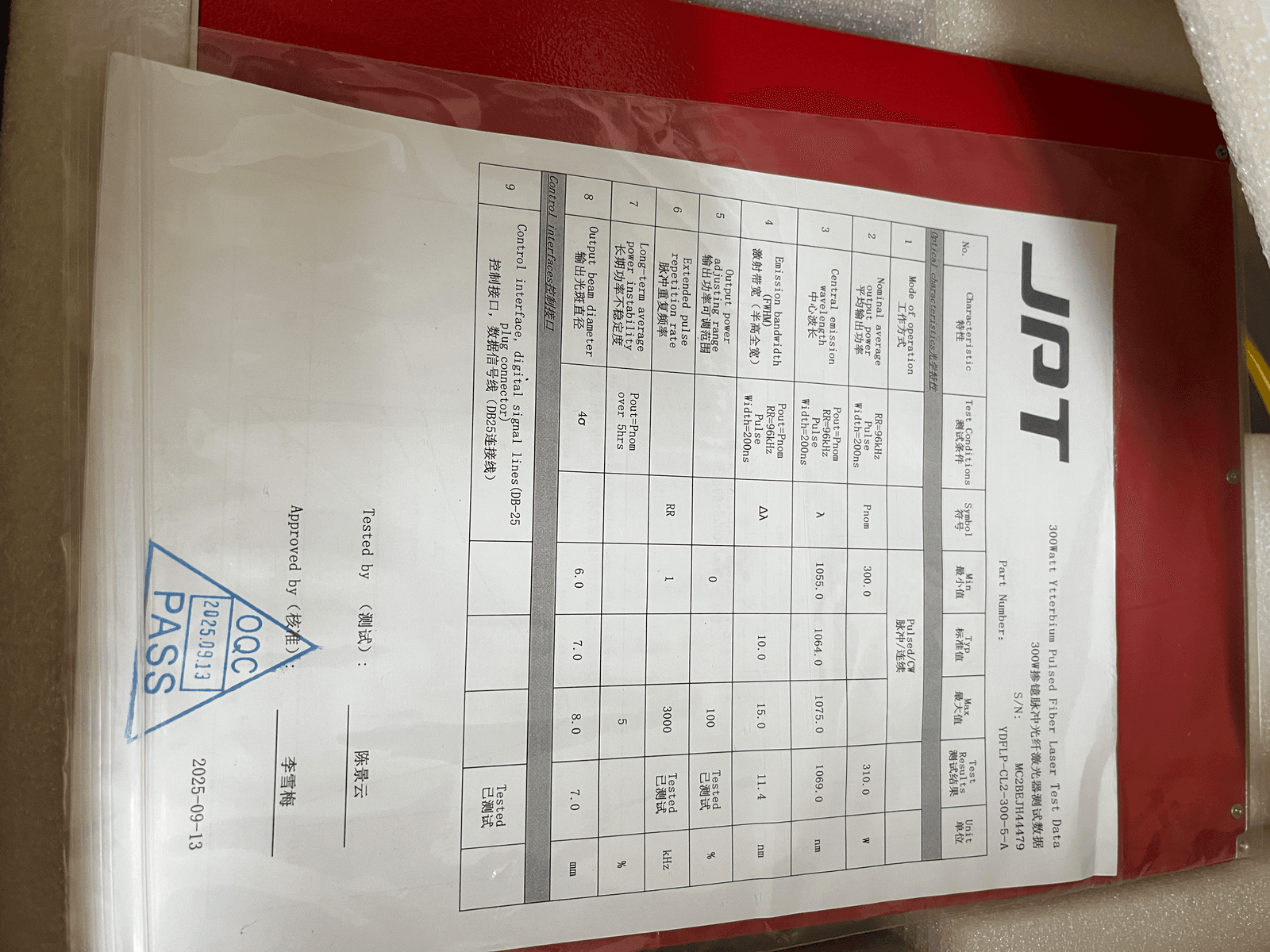
The FP-300 uses Master Oscillator Power Amplifier (MOPA) architecture — a low-power seed laser feeds a multi-stage amplifier chain. The seed sets the pulse characteristics; the amplifier provides the power. This decoupling is what gives MOPA fiber lasers their signature flexibility: pulse durations are independently adjustable from 20 to 500 nanoseconds, while average power scales smoothly across the full 10–300 W range.
For aircraft maintenance, that flexibility matters. Removing a thin acrylic topcoat needs short pulses at lower fluence. Stripping multi-layer epoxy primer wants longer pulses at higher fluence. Cleaning corrosion off a landing gear strut wants something in between. A single MOPA fiber laser handles all three by changing parameters — not by buying three different machines.
What This Means for Your Shop
If you've evaluated laser cleaning in the past and walked away because of maintenance costs, cooling complexity, or beam-quality issues — the technology you remember is not the technology that's available now. The fiber laser revolution that started around 2018 has matured into a maintenance-friendly, energy-efficient platform that fits into any hangar with a 220 V outlet.
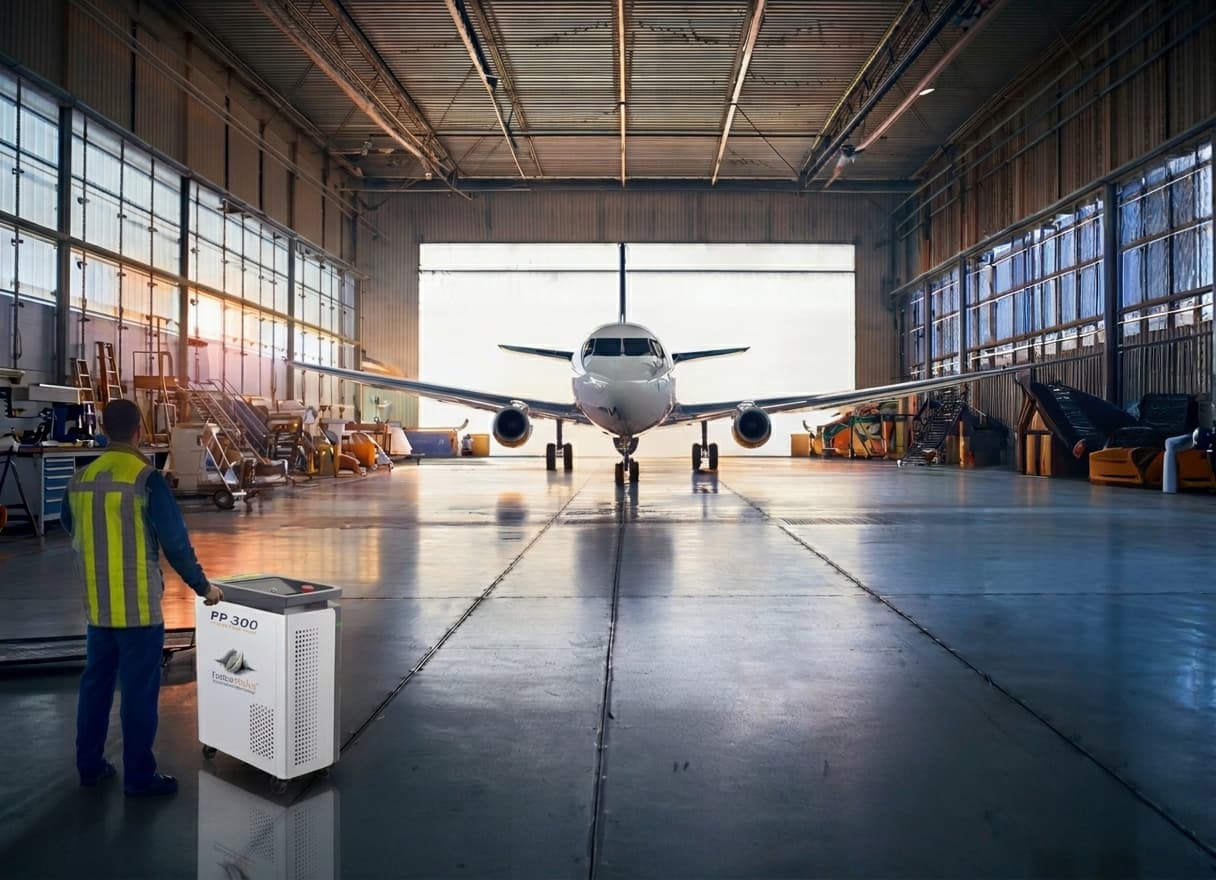
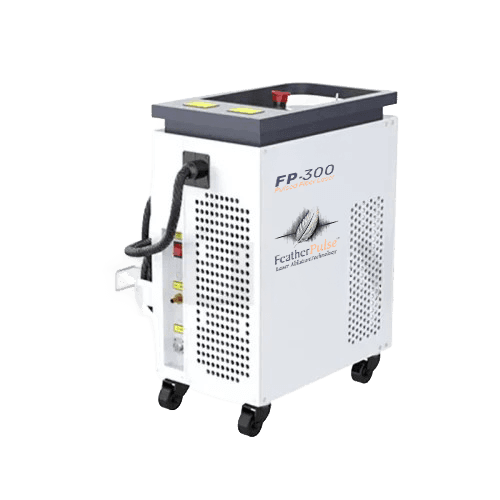
The FP-300 delivers 300 W of average power, 30 kW of peak power during pulses, in an air-cooled rolling case that you can wheel onto the ramp. That's the difference a generation of laser technology makes.