
Laser Cleaning Composite Materials: Power Limits for CFRP and Fiberglass
Composites Are Different
Aluminum forgives a wide parameter window. The substrate damage threshold is far above the paint ablation threshold, giving operators a 60× safety factor at typical settings. Composite materials don't have that luxury. The matrix (resin) and the reinforcement (fibers) have different ablation thresholds, and overshooting the matrix exposes fibers that can never be put back.
That doesn't mean composites can't be laser-cleaned — they absolutely can, and laser is often the only practical option for a Cessna composite cowling or a helicopter rotor blade. It just means the parameters are tighter and the operator's judgment matters more.
Carbon Fiber Reinforced Plastic (CFRP)
Material Properties
- Matrix: typically epoxy resin (60–80% laser absorption at 1064 nm)
- Reinforcement: carbon fibers (95% laser absorption — nearly black to the laser)
- Risk: fiber exposure if too much resin is removed, leading to delamination and water ingress
Safe Parameter Window
| Parameter | Setting |
|---|---|
| Maximum power | 40–60 W (much lower than aluminum) |
| Pulse duration | 30 ns (short pulses minimize heat load) |
| Repetition rate | 200 kHz (high frequency spreads energy) |
| Scan speed | 800 mm/s (fast to avoid heat buildup) |
| Maximum substrate temp | 60 °C (lower than aluminum's 120 °C limit) |
Warning Signs to Stop Immediately
- Discoloration — the resin starts looking burnt or yellowed
- Smoke without paint visible — means matrix is ablating, not coating
- Fiber fraying — individual carbon fibers becoming visible at the surface
- Delamination sounds — a sharper "crack" instead of the soft sizzle of normal cleaning
- Temperature spike past 60 °C between passes
Any one of these means stop, lower power, and re-evaluate. Carbon fiber damage is permanent.
Glass Fiber Reinforced Plastic (Fiberglass)
Material Properties
Fiberglass is more forgiving than CFRP. Glass fibers reflect more 1064 nm light than carbon fibers, and the glass itself has a higher ablation threshold. The matrix is typically polyester or epoxy.
Safe Parameter Window
| Parameter | Setting |
|---|---|
| Maximum power | 80 W |
| Pulse duration | 50–80 ns |
| Repetition rate | 40–60 kHz |
| Scan speed | 600 mm/s |
| Used on | Fairings, wingtips, antenna covers |
Honeycomb-Core Sandwich Panels
Many composite aircraft components are sandwich structures: thin composite face sheets bonded to an aluminum or Nomex honeycomb core. Laser cleaning the face sheet must avoid heating the bond line. Two practical approaches:
- Burst mode: 10 seconds on, 5 seconds off, monitored with an IR camera. Lets the bond line cool between bursts.
- High-speed scanning: 1000+ mm/s with multiple light passes rather than fewer heavy passes. Total energy delivered is the same; peak temperature is much lower.
Pre-Cleaning Inspection
Always inspect the composite for pre-existing damage before cleaning. Items to look for:
- Delaminations (tap test or coin test)
- Resin discoloration from previous heat exposure
- Surface cracks or crazing
- Bond-line voids near the panel edge
Laser cleaning won't repair any of these — it'll just expose them earlier. If the part has structural concerns, route to engineering before cleaning.
When to Use a Different Method
Laser cleaning isn't always the right answer for composites. Consider alternatives when:
- The part is small enough for soft media blasting at low pressure (15–20 psi)
- The coating is thin and chemical stripping is faster
- The composite is structural and any matrix removal is unacceptable
- The repair scheme calls for mechanical scuff-sanding to a specific Ra
Laser cleaning is a tool, not a religion. The right method is the one that meets the SRM requirements with the lowest risk to the part.
Field Notes from Composite Operators
Operators with significant composite cleaning experience report a consistent set of best practices:
- Always run a coupon test on a piece of the same composite before touching the aircraft
- Use thermocouples or an IR camera — don't trust the touchscreen's temperature readout alone
- Mark the cleaned area with painter's tape immediately to prevent over-cleaning
- Stop cleaning at the slightest sign of fiber exposure and reassess parameters
- Document the parameter set on the maintenance release — future operators benefit from your validated numbers
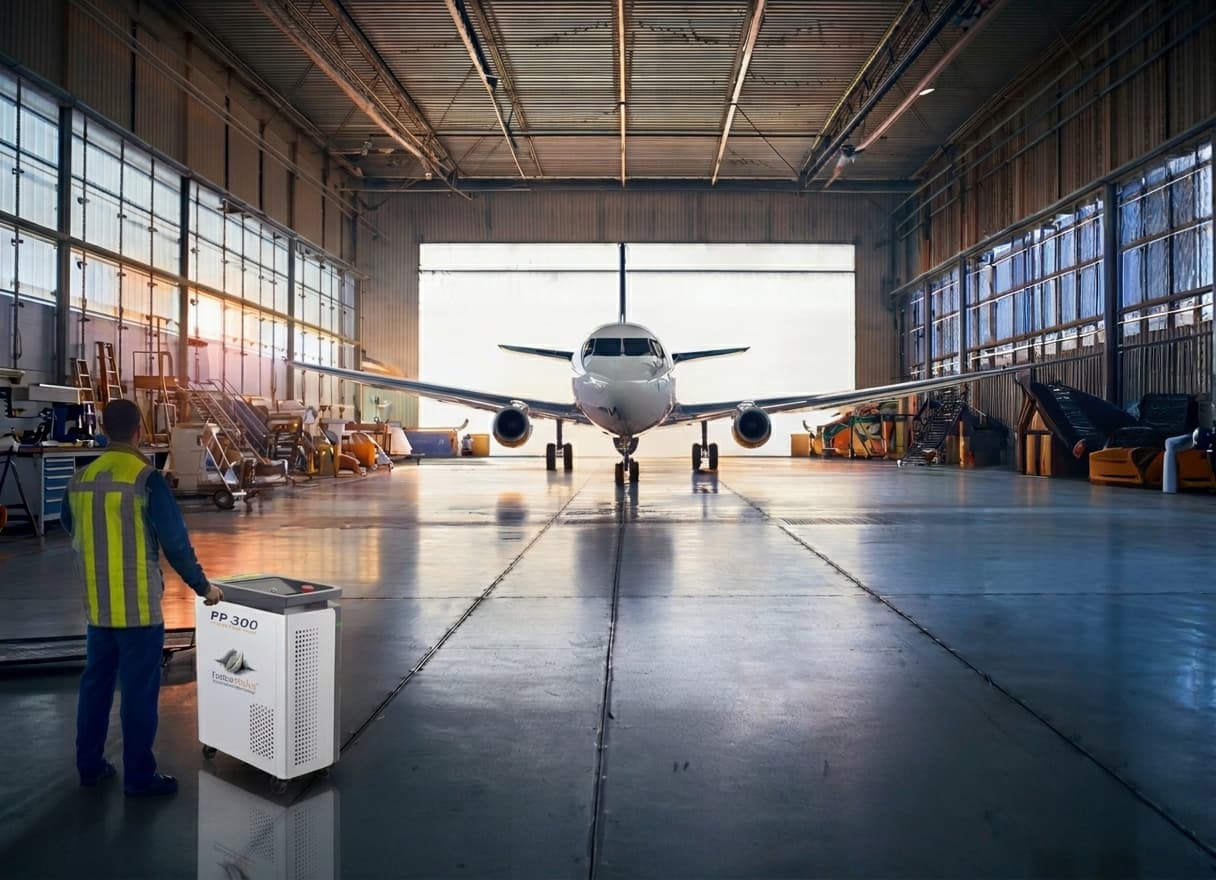
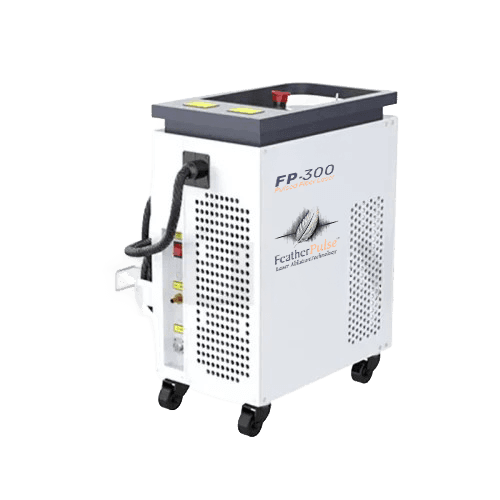
Composite cleaning is the most demanding application for the FP-300. It also has the most upside: a single laser system handles aluminum, composites, titanium, and magnesium, with no media changeover and no chemical waste. For shops with mixed-material aircraft, that flexibility is the strongest argument for the technology.